
Testosterone Therapy: Why Injections and Creams Offer More Control Than Pellets
Disclaimer: Statements in this post are for informational and educational purposes only and are not intended to diagnose, treat, cure, or prevent any disease. All services and care plans are determined at a licensed provider’s discretion based on individual labs, needs, and medical assessments. Some treatments may involve compounded medications that have not been reviewed by the FDA for safety or effectiveness. Visuals are for illustrative and branding purposes only; individuals shown are not actual patients, and product images are mock-ups that may differ from actual pharmacy-dispensed medications. Individual results may vary and are not guaranteed. See below for full details and important safety information.
What Is Testosterone Therapy? And Why It Matters!
Hormone replacement therapy (HRT) can be life-changing for both men and women navigating fatigue, weight changes, low libido, mood swings, or brain fog caused by declining hormone levels. But the decision doesn’t stop at whether to begin therapy — it’s equally important to consider how those hormones are delivered.
Today, many patients are offered several bioidentical hormone options, including creams, injections, and pellets. While pellets have gained attention for their convenience, research and clinical experience suggest that injections and transdermal creams often offer greater precision, flexibility, and safety, especially for those seeking a truly personalized, monitored approach to hormone balance.
Comparing Testosterone Delivery Methods

Testosterone Injections: Fast-Acting and Adjustable
Testosterone injections are administered either intramuscularly (IM) or subcutaneously (SC), typically every 1–3 weeks depending on the formulation. This route is well-studied and allows for precise control over dosing. Adjustments can be made quickly based on lab values or patient-reported symptoms, providing flexibility during the critical early months of therapy. Note: IM injections spaced farther apart may cause temporary peaks and troughs in testosterone levels, whereas more frequent SC injections provide smoother hormone levels.
Visuals are for illustrative and marketing purposes only. Individuals shown are not actual patients. You are encouraged to report negative side effects of prescription drugs to the FDA. Visit MedWatch or call 1-800-FDA-1088.

Transdermal Creams and Gels: Non-Invasive and Flexible
Applied daily to the skin, testosterone creams or gels provide steady absorption into the bloodstream. This non-invasive route allows for easy dose adjustment, avoids surgical procedures, and has a generally favorable side effect profile. Absorption can vary between patients depending on skin site, thickness, temperature, and adherence.
Visuals are for illustrative and marketing purposes only. Individuals shown are not actual patients. You are encouraged to report negative side effects of prescription drugs to the FDA. Visit MedWatch or call 1-800-FDA-1088.
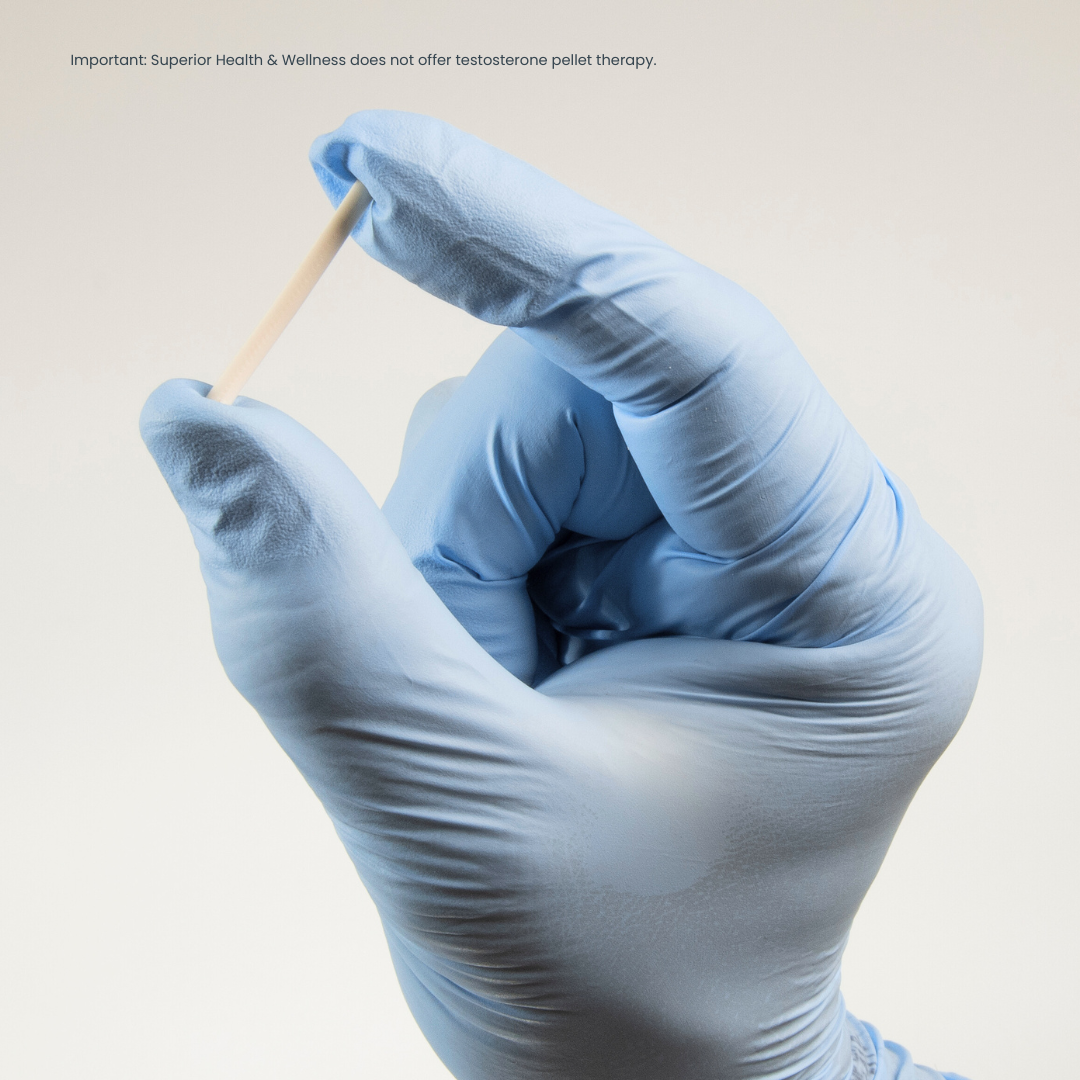
Testosterone Pellets: Long-Lasting but Less Precise
Testosterone pellets are small, rice-sized cylinders inserted beneath the skin. They slowly release testosterone over 3–6 months, theoretically providing a “steady” supply. Pellets are convenient because they require only a few insertions per year, but their hormone release is less predictable, and the dose cannot be adjusted once implanted.
Why Testosterone Injections and Creams Offer Greater Control and Safety
Precision dosing: Adjustments are straightforward based on labs or symptoms.
Reversibility: Therapy can be paused or stopped immediately if needed.
Predictable pharmacokinetics: Steadier hormone levels with fewer unexpected peaks or troughs.
Safety: Lower procedural risk and better-managed side effects.
Evidence: Decades of research support efficacy and long-term safety.
While pellets may work well for some patients who tolerate them and value infrequent dosing, injections and creams provide better control, safer outcomes, and more predictable symptom relief for most patients.

Product images are for mock-up and branding purposes only. Actual medications and packaging may vary based on pharmacy fulfillment. Visuals are for illustrative and marketing purposes only. Individuals shown are not actual patients.
Dose Adjustability and Long-Term Management
With injections and transdermal therapies, clinicians can frequently monitor and adjust dosing, keeping testosterone levels within a physiologic range. Studies show that pellet therapy often produces an initial surge, followed by a gradual taper that can leave levels subtherapeutic before the next insertion¹²³.
Many patients describe a “roller-coaster” experience with pellets — feeling great initially, then noticing symptoms such as fatigue or low libido return as hormone release declines. In contrast, injections and creams allow clinicians to respond promptly when hormone peaks or troughs occur, minimizing fluctuations and optimizing symptom relief.
In clinical experience, hormone pellet therapy can affect patients differently. Some women have experienced intense side effects from pellets, often due to very high initial testosterone levels, including mood changes, acne, or other hormone-related symptoms. Conversely, some men may notice little improvement if the pellet dose is too low, leaving them to wait until the next scheduled insertion to adjust therapy. These examples highlight the challenge of achieving an optimal, individualized hormone balance with a fixed-dose pellet system.
Reversibility: Adjusting or Pausing Testosterone Therapy
Non-implant routes offer immediate reversibility. If a patient experiences adverse effects — such as elevated red blood cell count, mood changes, or skin reactions — the dose of a cream can be reduced or therapy paused, and injections can be spaced out or temporarily withheld⁴⁵.
Pellets cannot be “turned off” once implanted. If side effects occur, patients typically must wait for the pellet to dissolve naturally (minor surgical removal is rarely needed). Starting with creams or injections can provide patients with reassurance, knowing that dosing can be adjusted at any time.
Safety and Managing Side Effects During Treatment
Research indicates that pellet therapy carries a slightly higher procedural risk than injections or creams, including infection, pellet extrusion, or local tissue reactions⁵⁶. Pellets can also produce supraphysiologic hormone levels early after insertion, potentially leading to polycythemia, mood changes, or other side effects.
Injections or creams generally produce fewer unexpected spikes and dips, resulting in more stable mood, libido, and energy. All testosterone therapies require monitoring for hematocrit, liver function, and cardiovascular risk factors to ensure safety.

Product images are for mock-up and branding purposes only. Actual medications and packaging may vary based on pharmacy fulfillment. Visuals are for illustrative and marketing purposes only. All treatments are prescribed at a licensed provider’s discretion, based on individual lab results, needs, and medical assessments.
Consistency and Hormone Absorption in Testosterone Therapy
Pellet absorption varies based on individual metabolism, tissue site, and pellet size¹²⁶. Some patients experience unexpected testosterone drops before the next pellet insertion, or find one pellet may behave differently from another.
Injectable and transdermal testosterone, in contrast, have well-established pharmacokinetics, allowing clinicians to manage therapy more effectively and reliably.
Convenience and Patient Compliance in Testosterone Therapy
Pellets are undeniably convenient, requiring fewer administrations per year. However, this convenience is balanced against the surgical procedure and the possibility of symptoms returning if pellet output declines prematurely.
Injections and creams require more frequent dosing, which some patients may find burdensome. Yet, for others, this active involvement provides control and reassurance: doses can be adjusted immediately in response to labs or symptoms, rather than waiting months for the next pellet cycle.
Long-Term Research and Clinical Evidence on Testosterone Treatment
The strongest evidence for safety, efficacy, and long-term outcomes exists for injections and transdermal testosterone. Randomized trials and large cohort studies have demonstrated benefits for energy, sexual function, mood, body composition, and cardiovascular health⁷⁸.
Pellets are less studied; much of the literature consists of retrospective reports or small case series. Professional reviews from the Endocrine Society and NASEM highlight that there is insufficient high-quality, long-term evidence to conclude that pellets are equivalent or superior to other routes³⁶. While some patients report satisfaction with pellets, variability and occasional complications reinforce the need for careful patient selection.

Product images are for mock-up and branding purposes only. Actual medications and packaging may vary based on pharmacy fulfillment. Visuals are for illustrative and marketing purposes only. Individuals shown are not actual patients.
Choosing the Right Testosterone Therapy for You
Testosterone replacement therapy can dramatically improve quality of life, but the route of administration matters. Injections and creams provide:
Greater dose control
Reversibility
Predictable hormone levels
A well-supported evidence base
Pellets may offer convenience, but they carry risks, variability, and limited adjustability that make them less ideal for many patients.
Ultimately, the best route balances effectiveness, safety, and patient lifestyle, with ongoing monitoring and open communication with a knowledgeable clinician. For most patients starting testosterone therapy, injections or creams offer a more flexible, safe, and evidence-based path to restored energy, vitality, and well-being.
Book a FREE Care Call Today to explore how we can help you feel your best.
Disclaimer: This content contains information related to prescription medications and is intended for educational and advertising purposes in accordance with FDA requirements. All prescription therapies must be used only as directed and under the supervision of a licensed healthcare provider. Benefits and risks should be discussed with your provider. Some treatments may include compounded medications that have not been reviewed by the FDA for safety or effectiveness. Individual results may vary and are not guaranteed. Product images are for mock-up and branding purposes only and may differ from actual pharmacy-dispensed medications. Visuals are for illustrative purposes only; individuals shown are not actual patients. Statements made are not intended to diagnose, treat, cure, or prevent any disease. For full prescribing information, please consult your provider or review the medication safety information. You are encouraged to report negative side effects of prescription drugs to the FDA. Visit MedWatch or call 1-800-FDA-1088.
