
Disclaimer: The content provided on this website is for informational and educational purposes only and is not intended as a substitute for professional medical advice, diagnosis, or treatment. The information presented does not constitute medical recommendations and should not be used to guide clinical decisions. Always seek the advice of a licensed healthcare provider regarding any medical condition or treatment. Do not disregard or delay professional medical care based on information found on this site. Some services may involve compounded medications that have not been reviewed by the FDA for safety or effectiveness; no therapeutic claims are made for these products. Visuals are for illustrative purposes only; individuals shown are not actual patients. Individual results may vary. See full safety information for more details.
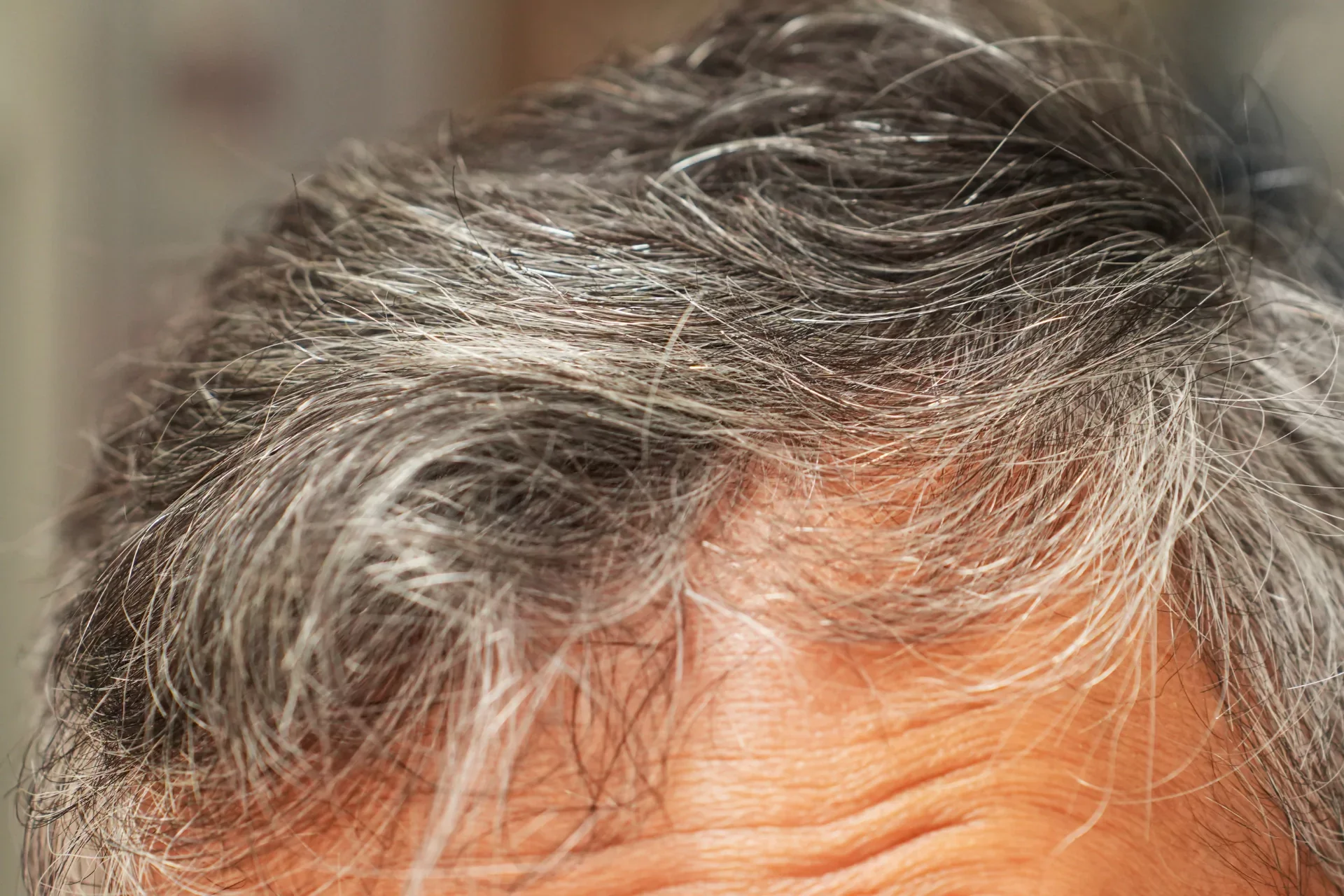
Hair loss is one of the most common concerns men raise when they begin testosterone therapy for hypogonadism (a condition in which the body does not produce enough testosterone).
For most men, it is not the reason they seek treatment. They come in because energy has dropped, libido has changed, recovery feels slower, or mood and focus are not what they used to be. Hair enters the conversation later.
The concern makes sense. Hair loss is visible. It affects confidence. And because testosterone is a male hormone, it seems reasonable to assume that increasing it might directly cause baldness.
There is a connection, but it is not as simple as “testosterone causes hair loss.”
To understand the risk clearly, it helps to look at three things: genetics, how androgens (male hormones) work in the body, and how individual differences shape outcomes.
The Foundation: Genetics
The most common form of hair loss in men is male pattern hair loss, medically known as androgenetic alopecia. It usually follows a familiar pattern: gradual thinning at the temples, recession of the hairline, and thinning at the crown.
Research shows that this condition is strongly influenced by inherited traits. A large genome-wide association study identified 71 genetic regions linked to male pattern baldness (Pirastu et al., 2017). Variants in the androgen receptor gene—essentially the part of the cell that “reads” androgen signals—play an especially important role (Hillmer et al., 2005).
In simple terms, some men inherit hair follicles that are highly sensitive to androgens. Others inherit follicles that are more resistant. That built-in sensitivity largely determines whether thinning becomes noticeable over time.
Testosterone therapy does not create that genetic sensitivity. It interacts with whatever predisposition is already present.
Family history can offer useful clues. If close male relatives experienced early thinning or a receding hairline, that pattern often reflects inherited follicle sensitivity rather than hormone levels alone.
Where DHT Fits In
Testosterone can be converted in the body into a more potent androgen called dihydrotestosterone, or DHT. This conversion happens through an enzyme called 5-alpha reductase.
DHT binds to androgen receptors more strongly than testosterone does (Swerdloff et al., 2017; Traish, 2018). In scalp follicles that are genetically sensitive, this binding contributes to a process called miniaturization. Over time, the follicle produces thinner, shorter hairs. Eventually, some follicles produce hair that is so fine it is barely visible.
DHT is not inherently harmful. It plays normal and important roles in male development and physiology. Hair loss depends far more on follicle sensitivity than on hormone levels alone. And men with average testosterone levels can develop significant baldness if genetically predisposed, while others with similar levels may not.
Does Testosterone Therapy Raise DHT?
In many men, testosterone therapy increases circulating DHT because more testosterone is available for conversion (Swerdloff et al., 2017).
However, blood levels do not always reflect what is happening inside specific tissues. Research looking at prostate tissue has shown that tissue-level DHT can remain relatively stable even when blood testosterone changes within normal physiologic ranges (Marks et al., 2006; Thirumalai et al., 2016).
Hair follicles operate locally. They are influenced by enzyme activity in the scalp, receptor density, and inherited sensitivity. Two men can have similar lab values and very different hair outcomes because their follicles respond differently to the same hormonal environment.
What the Clinical Evidence Shows
Long-term clinical trials of testosterone therapy in men with hypogonadism have not typically tracked hair loss as a primary outcome, so exact incidence rates in this population are limited. Earlier reviews concluded there was no clear evidence that testosterone replacement universally accelerates male pattern baldness (Rhoden & Morgentaler, 2004), though those data were limited.
Additional insight comes from populations exposed to sustained testosterone therapy over time. In transgender men receiving testosterone, androgenetic alopecia has been observed in approximately 17 percent after one year, with higher rates over longer durations (Irwig, 2017). This does not mean testosterone inevitably causes baldness. It does reinforce the biological principle that androgen exposure can contribute to the expression of male pattern hair loss in individuals who are genetically susceptible.
Put more simply: if the predisposition exists, increased androgen exposure may allow the pattern to show itself sooner or progress somewhat faster. If the predisposition is weak or absent, the effect may be minimal.
Age Matters More Than Many Realize
Hair loss becomes more common with age, regardless of testosterone therapy. Primary care data estimate that by age 50, about half of men have some degree of male pattern hair loss (Phillips et al., 2017; Dakkak et al., 2024).
Many men begin testosterone therapy in their 40s or 50s—precisely when natural thinning often becomes more noticeable. When those timelines overlap, it is easy to assume that treatment is the sole cause. In reality, natural progression and therapy frequently coincide.
Not Every Hair Change Is the Same
It also helps to distinguish between gradual pattern thinning and temporary shedding.
Male pattern hair loss usually progresses slowly. You might notice the hairline shifting back over time, the crown appearing more visible in bright light, or hair texture feeling finer.
By contrast, telogen effluvium is a temporary shedding condition that can follow illness, surgery, major stress, rapid weight changes, or other physiologic strain (Malkud, 2015; Chien Yin Go et al., 2021). In that case, more hair than usual may fall out over several weeks, but the pattern does not necessarily match classic crown or temple thinning.
Thyroid dysfunction, iron deficiency, and systemic health changes can also contribute to shedding. Understanding which pattern is occurring matters, and that distinction requires clinical context.
Thinking About Risk in Practical Terms
The evidence supports several steady conclusions.
Genetics largely determine baseline susceptibility. DHT contributes to follicle miniaturization in susceptible men. Testosterone therapy can increase androgen exposure. In some men, that increase may accelerate progression of existing male pattern hair loss. Not every man on testosterone develops noticeable thinning.
Risk is not all-or-nothing. It falls along a spectrum.
Testosterone replacement aims to restore physiologic hormone levels, not exceed them (Bhasin et al., 2018). Maintaining appropriate ranges reduces the likelihood of androgen-related side effects.
If you notice changes, the next step is discussion and evaluation rather than abrupt discontinuation. Reviewing hormone levels, family history, timing, and overall health often provides a clearer picture.
Putting It All Together
Testosterone replacement therapy for appropriately diagnosed hypogonadism has demonstrated benefits in sexual function, lean mass, bone density, and mood in certain populations (Snyder et al., 2016; Bhasin et al., 2018).
Hair changes, when they occur, should be weighed within that broader context. For some men, preserving hair density is a high priority. For others, improved energy, strength, and quality of life take precedence.
The most important step is informed decision-making. If hair thinning becomes a concern during therapy, talk with a provider. A thoughtful evaluation leads to better decisions than reacting out of fear.
Book a FREE Care Call Today
to explore how we can help you feel your best.
Active Patient? Schedule your follow-up today and reconnect with your Superior provider for personalized guidance.
Disclaimer
This content is provided for informational and educational purposes only and is not intended as a substitute for professional medical advice, diagnosis, or treatment. The information presented does not constitute medical recommendations and should not be used to guide clinical decisions. Always seek the advice of a licensed healthcare provider regarding any medical condition or treatment. Do not disregard or delay professional medical care based on information found on this site. Some services may involve compounded medications that have not been reviewed by the FDA for safety or effectiveness. Visuals are for illustrative purposes only; individuals shown are not actual patients. Individual results may vary. You are encouraged to report negative side effects of prescription drugs to the FDA. Visit MedWatch or call 1-800-FDA-1088.
References
Hillmer, A. M., Hanneken, S., Ritzmann, S., Becker, T., Freudenberg, J., Brockschmidt, F. F., et al. (2005). Genetic variation in the human androgen receptor gene is the major determinant of common early-onset androgenetic alopecia. American Journal of Human Genetics, 77(1), 140–148. https://doi.org/10.1086/431425

Hair Restoration is a compounded topical formulation designed to support scalp health and improve the appearance of thinning hair. This multi ingredient solution combines minoxidil, finasteride, fluocinolone, tretinoin, caffeine, and azelaic acid to address several common contributors to hair thinning, including reduced blood flow to hair follicles, hormonal influences, scalp inflammation, and impaired product absorption.
Minoxidil supports blood flow to the scalp to help stimulate hair follicles. Finasteride is included in a topical form to help reduce scalp DHT exposure. Fluocinolone may help calm inflammation that can contribute to follicle stress. Tretinoin can enhance penetration of other ingredients and support skin turnover. Caffeine and azelaic acid are included to support scalp environment and overall follicle health.
Treatment is individualized based on your pattern of hair thinning, medical history, and provider evaluation. Consistent use is required to maintain results. Discontinuation may result in gradual return of hair shedding.
This product is dispensed as a compounded topical medication prepared by a licensed compounding pharmacy. Compounded medications have not been reviewed or approved by the FDA for safety or efficacy. Review important medication safety information.
Pricing is provided for reference only. All medications require a valid prescription from a Superior provider and are dispensed directly by our partnering pharmacies — not sold through this website.